The Must-Have Photos from Every Corporate Event
You have booked the venue, confirmed the speakers, and finalized the catering. But when it comes time to think about photography, a lot of event planners hit a wall. What exactly should be on the shot list? How do you make sure you walk away with everything you need?
After 18 years of photographing corporate events, from galas and fundraisers to conferences, retreats, and awards ceremonies, I have a pretty clear picture of what matters. And if you are still on the fence about whether professional photography is worth it for your event at all, I covered that question in depth in my last post. Here, let's get into the specifics: what should actually be on your shot list.
The Must-Have Moments
These are the shots that anchor the story of your event. No matter the size or format, these are what I prioritize first.
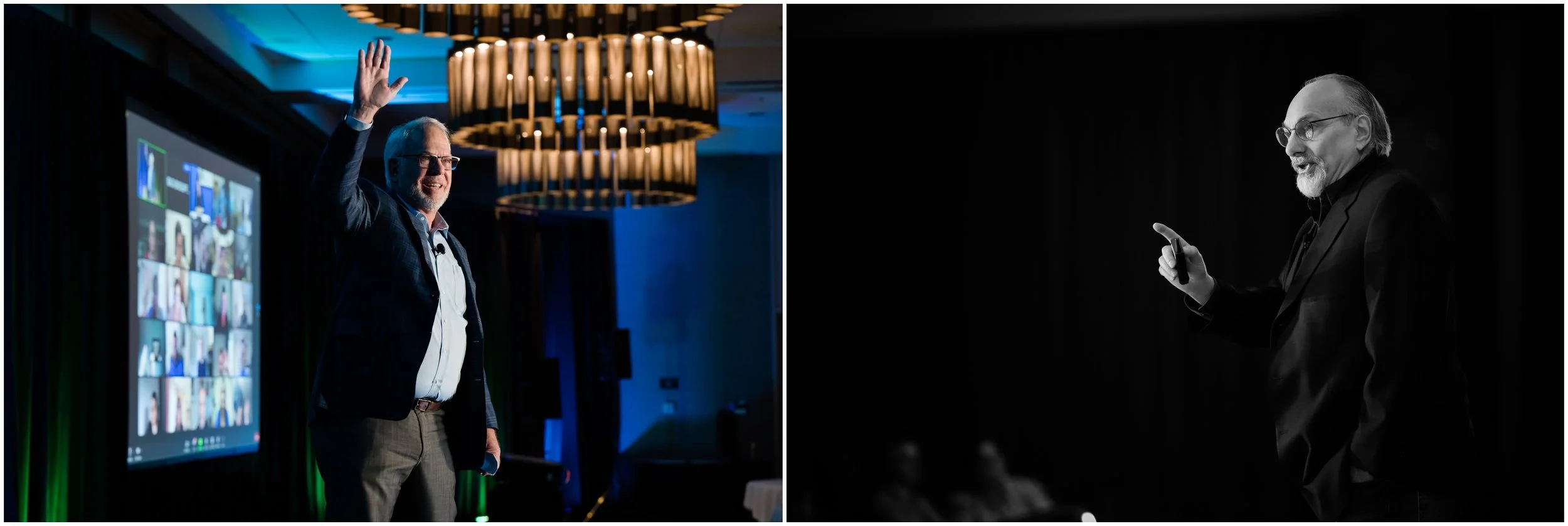
Keynote speakers and presentations. If someone is taking the stage, that moment needs to be captured well. This means getting the speaker in their element, lit properly, and ideally with some audience reaction shots to give context. A great speaker photo does double duty: it documents the event and it gives you marketing material for next time.
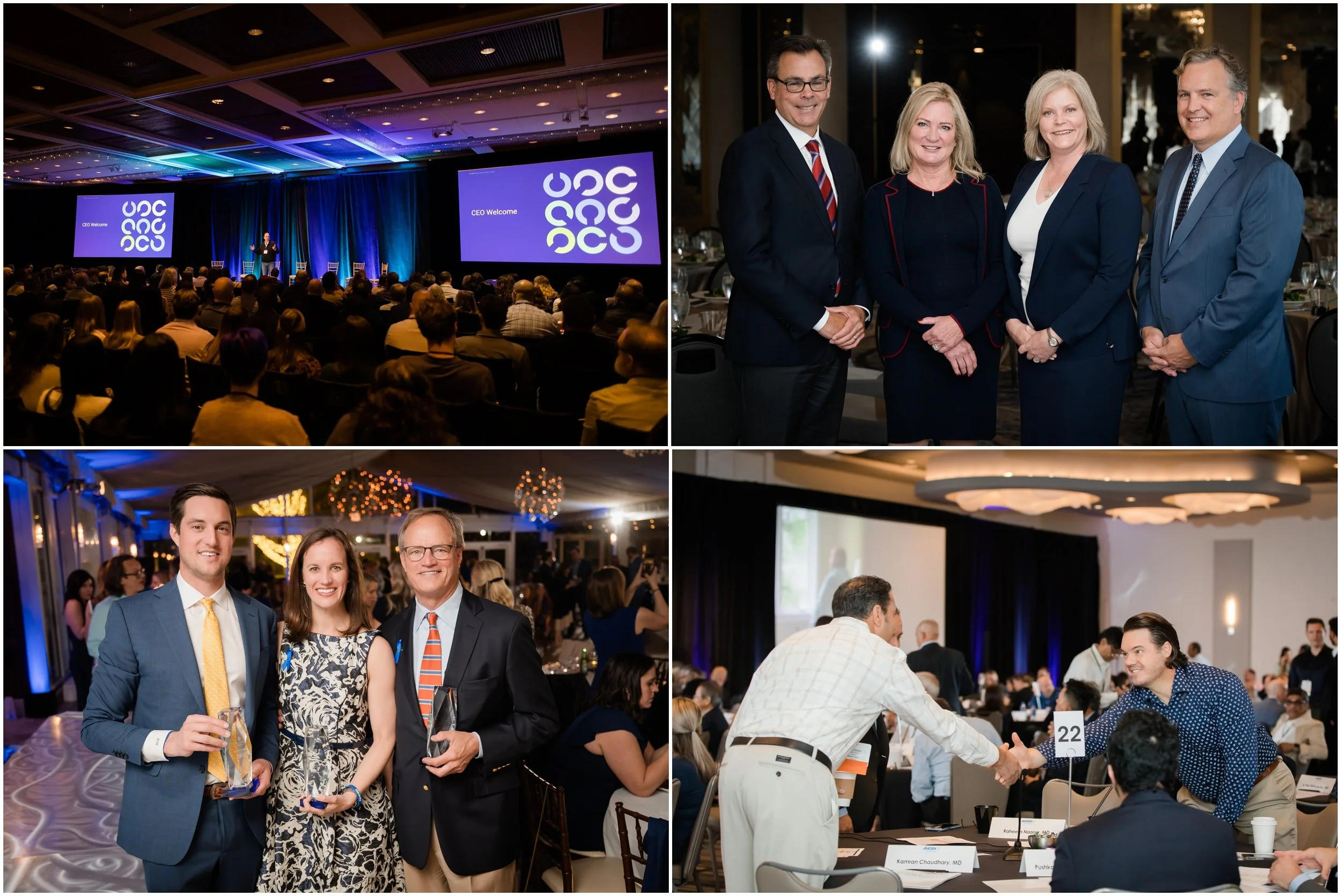
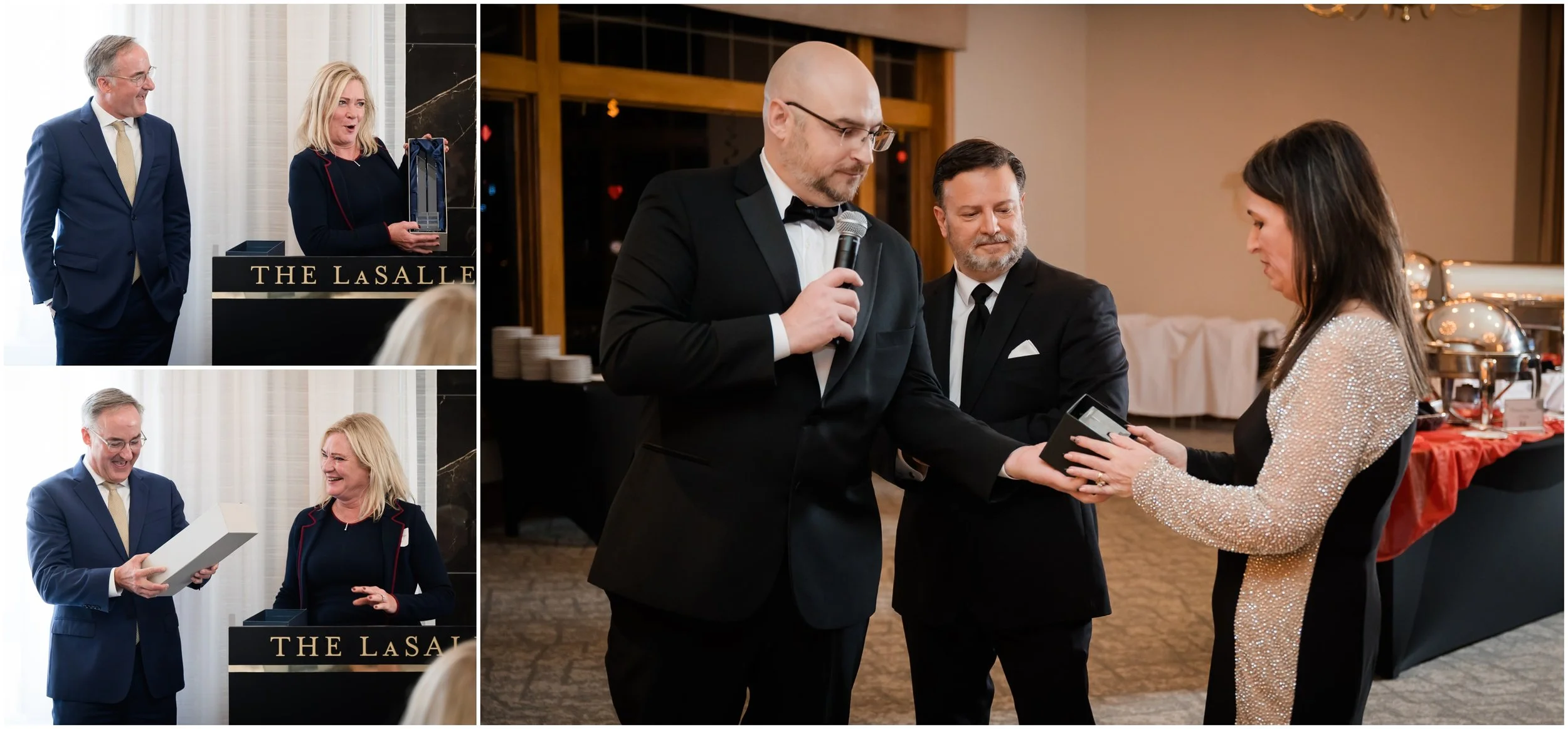
Award and recognition moments. These are the emotional high points of most corporate events. Someone is being honored, and they are not going to forget it. Neither will the people in the room. These shots deserve real attention: the handshake, the reaction, the pride on someone's face. When done right, they are some of the most powerful images a company can have.
Group photos of teams and leadership. Executive teams, department groups, and board members together in one frame. These shots take more time and coordination than people realize, which is exactly why they need to be planned into the schedule deliberately. More on that in a moment.
Candid networking and guest interactions. The handshakes, the conversations, the laughter over dinner. These are the shots that make an event feel alive rather than staged. They are also the ones that perform best on social media because they show real people having a real experience.
The Shot Most People Forget to Ask For? The Wide Room Shot!
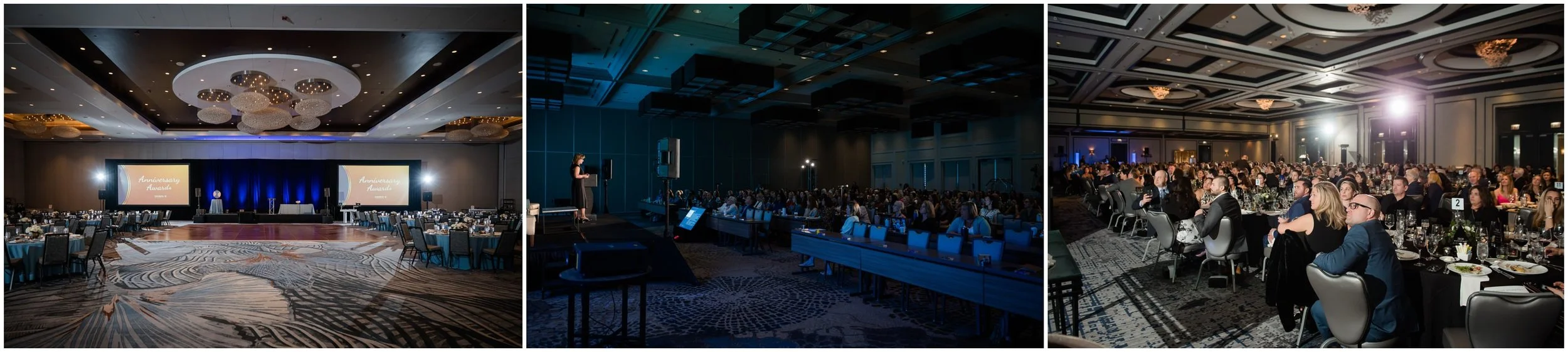
I cannot tell you how many clients light up when they see a wide shot of their event for the first time. You spent significant money on a beautiful venue, incredible lighting, a room full of people dressed up and engaged. A wide shot captures all of that in one frame. It shows the scale, the energy, the investment.
Nobody thinks to ask for it ahead of time, but everyone loves it when they see it. It is also one of the most useful images for promoting next year's event. If you want people to show up, show them what they would have been a part of.
Detail Shots That Tell the Full Story
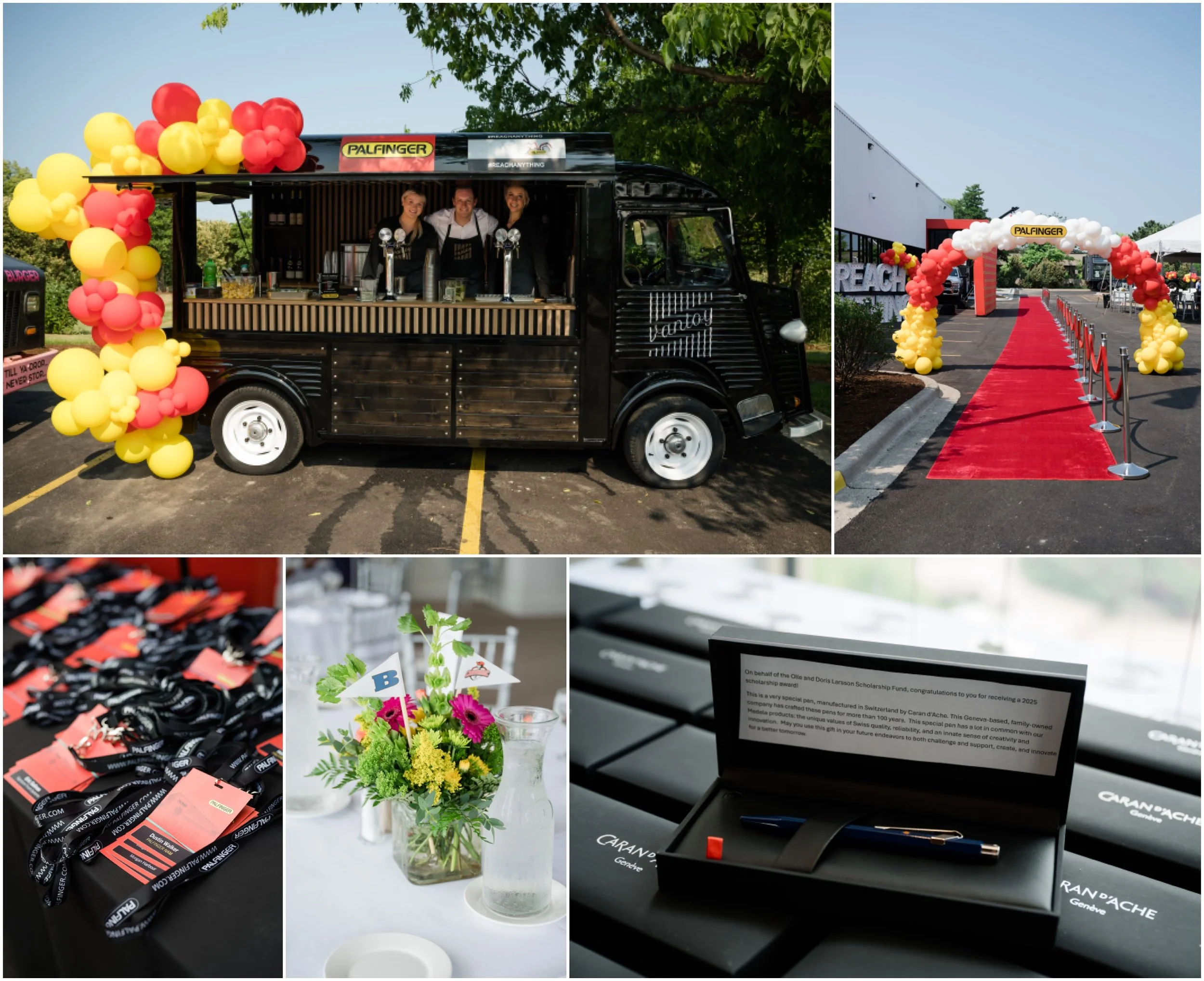
Beyond the people and the program, there are details worth capturing: the signage, the centerpieces, the awards themselves before they are handed out, the stage setup, branded materials. These images round out the full story of your event and come in handy for recaps, press releases, and internal communications.
Build Your Shot List in Chronological Order
Here is something that makes a real difference: if you are putting together a shot list, organize it chronologically.
A shot list that jumps around is hard to execute in a live event environment. When the list follows the natural flow of the day, your photographer can work with the momentum of the event rather than against it. They know what is coming next, they can position themselves ahead of time, and nothing gets missed because someone was still setting up for a shot that already happened.
The most useful shot lists spell out the must-have moments clearly, identify the key groupings for team photos, and flag anything you need specifically for marketing collateral. If the CEO speaking with your top client is a shot you need for the annual report, say so. The more your photographer understands what the images are actually for, the better they can deliver.
How Many Photographers Do You Need?
This is a question I get often, and the honest answer is: it depends.
For a smaller, single-room event with a straightforward timeline, one experienced photographer can cover everything well. For a larger event with multiple rooms, simultaneous breakout sessions, or a tight timeline with group photos and a keynote happening close together, a second shooter makes a real difference. Having two sets of eyes means nothing gets missed when two important things happen at the same time.
When we talk through your event during the planning process, I will always give you an honest recommendation based on your specific setup, not just a default answer.
Why the Photos Matter Long After the Event
The images from your corporate event are not just a record of what happened. They become your social media content, your website refresh, your promotional material for next year. According to recent data from ZoomSphere, static image posts on LinkedIn are delivering some of the highest engagement rates of any content format, which is good news if your company is trying to reach other professionals and decision-makers. The photos you walk away with from one well-planned event can fuel months of content.
The Moment That Says Everything
Beyond the shot list, there is something that happens at corporate events that is harder to plan for but worth chasing. It is the emotion of the event!
When a company's owner or CEO stands up to speak, and they genuinely believe in what they have built, you can feel it in the room. There is an energy that is hard to describe but impossible to miss. Getting that on camera, the speaker fully in it, the audience leaning in, that electricity, is one of the most powerful things a photograph can do for a company. It is not just documentation. It is proof of something real.
When two people embrace in a hug and you can feel that they are so happy to see each other in person, that is another image that is powerful and can really show the company culture.
That kind of image does not happen by accident. It happens when a photographer is paying attention, knows the room, and is ready for it.
If you are planning a corporate event in the Chicago northwest suburbs and want to talk through what coverage makes sense, take a look at my corporate event photography pricing or reach out here and let's put together a plan.